
Market Resilience and Strategic Growth Drivers
Despite a projected moderation in global goods trade growth to around 0.5% for 2026, industry confidence remains notably high. A significant 94% of trade leaders expect their trade growth in 2026 to match or exceed 2025 levels. For the toy sector, this resilience is anchored in stable underlying demand. The global toy and games market is forecast to maintain a steady Compound Annual Growth Rate (CAGR) of 4.8% from 2026 onward, driven by increased disposable income, the growing importance of educational play, and the expansive reach of e-commerce.
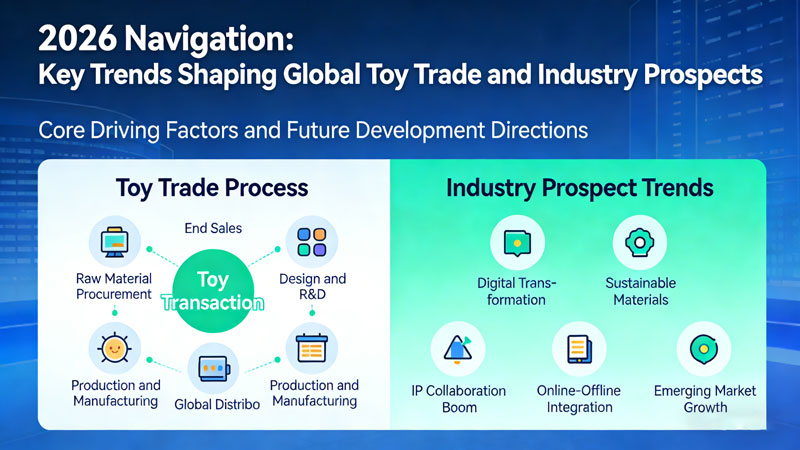
China, the world's largest goods trader for nine consecutive years, provides a robust backbone for the industry-1. Its foreign trade has started 2026 with vitality, supported by new shipping routes, thriving digital trade models, and deepening institutional openness. For toy exporters, this translates into a more efficient logistics network and a policy environment increasingly geared towards fostering high-value, innovative exports.
Top Toy Industry Trends Defining 2026
This year, several interconnected trends are set to define commercial success and product development.
1. The Intelligent Play Revolution: AI Toys Go Mainstream
The integration of sophisticated Artificial Intelligence (AI) is the most transformative force. AI-powered smart toys that learn, adapt, and provide personalized interactive experiences are moving from niche to mainstream. These are no longer simple voice responders; they are companions capable of real-time interaction and adaptive storytelling-2. Analysts project significant penetration growth, with the domestic AI toy market in China alone potentially reaching a 29% penetration rate in 2026. This "dynamic" upgrade, adding interactive capabilities to traditional "static" toys, is expanding the market's appeal across all age groups.
2. Sustainability: From Ethical Choice to Market Imperative
Driven by consumer demand, particularly from millennial and Gen Z parents, and tighter safety regulations, eco-conscious play is non-negotiable. The market is seeing a decisive shift towards toys made from recycled, biodegradable, and sustainable materials like bamboo, wood, and bio-plastics. Furthermore, the second-hand toy market is gaining traction. In 2026, sustainable practices are a core component of brand value and a key competitive advantage.
3. The Enduring Power of IP and Nostalgia
Licensed toys from popular films, streaming shows, and games remain a powerful market driver. Alongside this, "neo-nostalgia" – reinventing classic toys with modern twists – continues to bridge generations and attract adult collectors. The success of Chinese IP toys and global brands like LEGO in targeting adults with complex builds shows that toys fulfilling emotional and "collectible" desires represent a high-growth segment.
4. STEAM and the Outdoor Renaissance
Educational toys focused on Science, Technology, Engineering, Arts, and Mathematics (STEAM) are experiencing robust growth. This segment is projected to reach a market size of USD 31.62 billion by 2026, with a CAGR of 7.12%. Concurrently, there is a renewed emphasis on outdoor and active play. Parents are actively seeking toys that encourage physical activity, social interaction, and a break from digital screens, fueling growth in sports equipment and outdoor games.
Strategic Imperatives for Exporters in 2026
To capitalize on these trends, successful exporters are advised to:
Focus on Value over Price: Competition is shifting from cheap alternatives to superior technology, safety, eco-credentials, and emotional appeal.
Embrace Digital Trade Channels: Leverage cross-border e-commerce and digital platforms for market testing, brand building, and direct consumer engagement.
Prioritize Agile and Compliant Operations: Adapt to "small-batch, fast-response" production models and ensure strict compliance with international safety and environmental regulations from the outset.
Outlook: A Year of Strategic Evolution
The global toy trade in 2026 is characterized by intelligent adaptation. While macroeconomic currents require careful navigation, the industry's fundamental drivers – play, learning, and emotional connection – remain strong. Companies that successfully balance technological innovation with sustainability, cater to cross-generational nostalgia, and navigate the international trade landscape with agility are best positioned to thrive. The journey is no longer just about shipping products, but about exporting engaging experiences, trusted brands, and sustainable value.
Post time: Jan-22-2026


