
A series of magnetic building cube recalls in 2026 has redirected attention inside the toy industry from color and piece count to a less visible specification: how the magnet is held inside the plastic. In August 2026, roughly 213,500 magnetic building cube sets sold on a major online marketplace were recalled after at least two children required surgery to remove ingested magnets, with at least 27 additional reports of cubes breaking or opening during use. The U.S. Consumer Product Safety Commission noted that the hazard arises when cheap plastic housings fracture under ordinary play pressure, releasing small but powerful magnets that can attract each other across intestinal loops and cause perforation, blockage, or sepsis.
Industry analysis of the recalls points to manufacturing choices rather than design intent. To hold wholesale unit costs under a few dollars, some producers reduce ultrasonic plastic welding time and housing wall
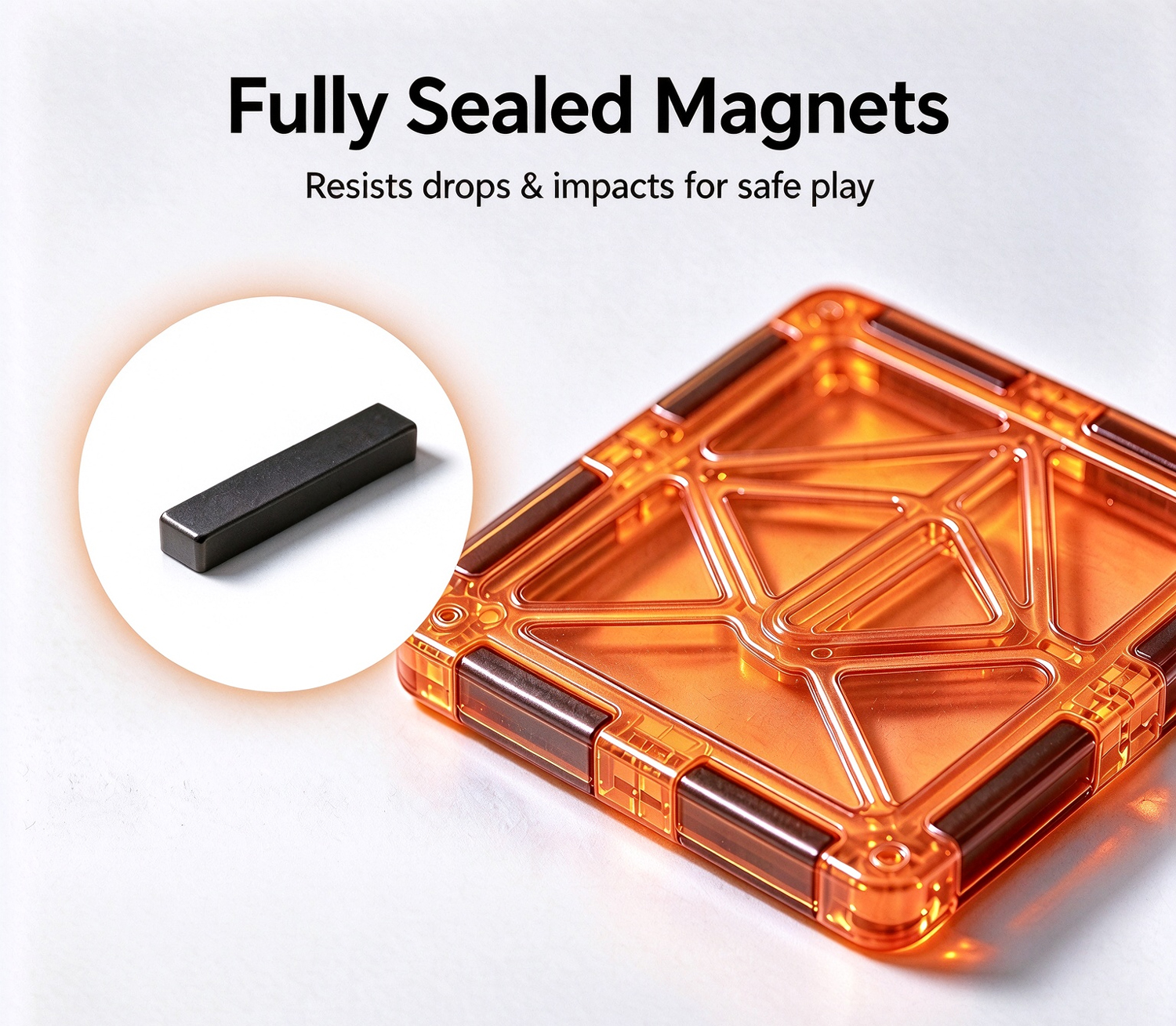
thickness, leaving seams that split under impact. By contrast, tiles that use fully encapsulated magnets held by ultrasonic welding are described in safety-focused buying guides as a structural benchmark: the magnet cannot be reached, felt, or removed even after repeated drops and stacking.
For toy suppliers serving North American and European families, encapsulation is shifting from a technical footnote to a trust signal. Parents searching for magnetic tiles are increasingly arriving with a specific question: can the magnet come out. A supplier that can explain welding depth, wall thickness, and drop-test protocol in plain language is answering that question before it becomes an objection. Encapsulation is not a certification, but in the current recall climate it functions as the first practical screen that separates a durable building toy from a hidden ingestion risk.
Post time: Nov-10-2026


