
China's foreign trade growth engine has undergone a significant shift in the first half of 2026, with high-end manufacturing sectors including precision machine tools, photovoltaic products, and new energy vehicles emerging as the primary drivers of export expansion, according to industry analysts and official data.
At the third Global Overseas Summit held in Singapore in late June,Financial writer Xiaobo Wu noted that China's foreign trade growth momentum has shifted markedly in the first half of 2026, with
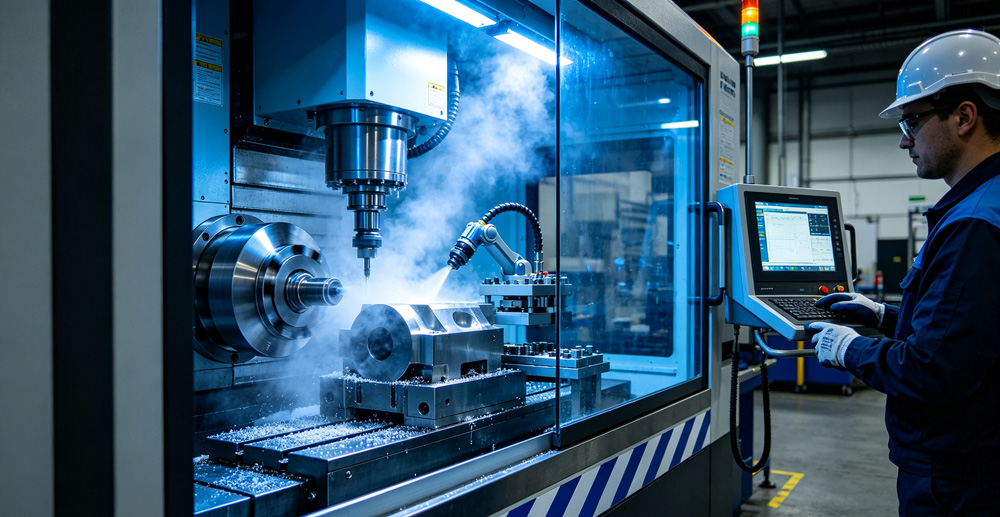
high-end manufacturing becoming the main growth force. This transition reflects a broader structural upgrade of China's export economy.
Precision Machinery and Industrial Robots Lead the Charge
Official customs data shows that in the first two months of 2026, China's exports of mechanical and electrical products reached 2.89 trillion yuan, up 24.3% year-on-year, with the share of total exports continuing to rise. Industrial robots and high-end machine tools both achieved double-digit growth, while AI products made significant contributions to export growth.
In 2025, China's exports of specialized equipment, high-end machine tools, and industrial robots grew by 20.6%, 21.5%, and 48.7% respectively. China has officially become a net exporter of industrial robots. These figures underscore the accelerating transformation of China's manufacturing sector toward higher value-added production.
New Energy Vehicles and Photovoltaics Maintain Strong Momentum
China's new energy vehicle exports continued their rapid expansion in 2026. In the first quarter alone, electric vehicle exports grew 77.5% year-on-year. Chinese enterprises now supply 70% of the world's photovoltaic modules and 60% of wind power equipment globally, with export shares in electric vehicles, photovoltaics, and batteries surpassing those of traditional industrial nations.
Policy Support for High-End Manufacturing Exports
Local governments are actively supporting the high-end manufacturing export push. Shandong Province recently launched a "Specialized and Sophisticated Foreign Trade Premium Product Cluster Overseas Action," targeting specialized equipment, electronic appliances, and other sectors as key cultivate industries, with the goal of building multiple 10-billion-yuan-level export clusters by 2026.
Outlook: From Product Exports to Capacity Exports
Looking ahead, Chinese enterprises are expected to accelerate the transition from simply exporting goods to relocating production capacity overseas. In 2026, more Chinese companies may establish assembly plants or micro-factories in Europe, Mexico, Brazil, and the Middle East, leveraging higher automation for localized production.
"The fundamentals supporting China's long-term economic growth have not changed, and the advantages and potential of foreign trade continue to manifest," said Wang Jun, Vice Minister of the General Administration of Customs, reinforcing confidence in the continued strength of China's high-end manufacturing exports.
Post time: Jul-20-2026


