
Toy Fair 2026 identified a conscious reset in how families approach play: rather than rejecting technology outright, parents are carving out screen-free space for creativity, emotional regulation, and connection. The numbers behind that shift are concrete. A Toy Association survey found that 78 percent of U.S. parents want more toys that help children develop creativity and problem-solving skills, and the global STEM toy segment is projected to nearly double in annual revenue between 2024 and 2034. The screen-free kids activity market was valued at USD 35.40 billion in 2025 and is forecast to grow from USD 37.40 billion in 2026 to USD 61.41 billion by 2034, a 6.40 percent CAGR.
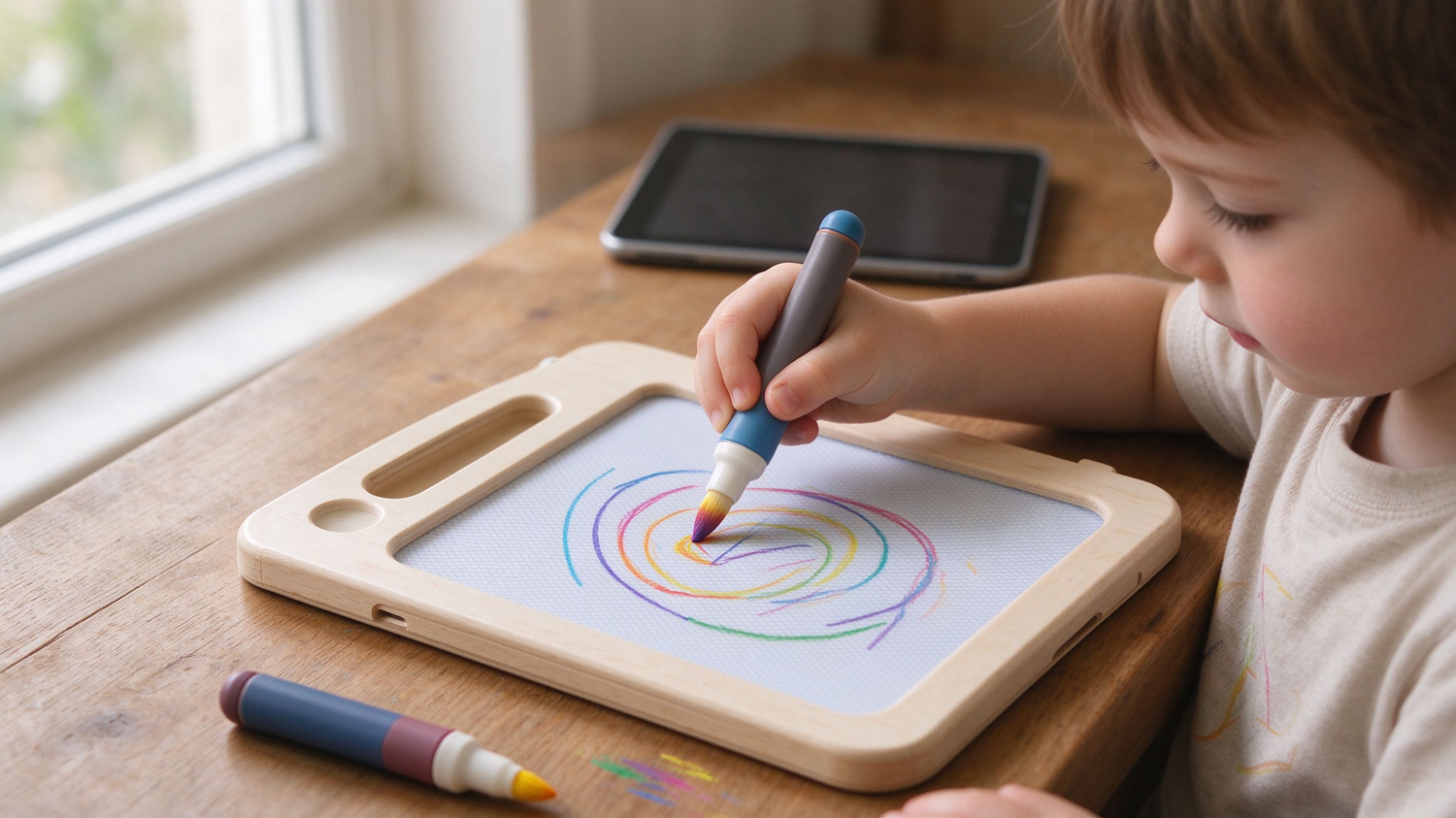
Drawing boards occupy a useful position inside this shift because they do not require a parent to schedule an activity or supervise a kit. A board and a stylus are always ready, with no setup, no consumables, and no screen. Market research on drawing boards with flash cards, a closely related format, estimates the global segment at roughly USD 160 million in 2024 with steady single-digit growth through 2031, suggesting a stable base rather than a spike category.
The opportunity for toy suppliers is not to position a drawing board as an educational product with a list of claims, but as the default screen-free outlet that fits into the gaps of a family day: the ten minutes before dinner, the car ride, the wind-down after school. A board that erases cleanly, survives being stepped on, and stores a stylus without losing it answers the practical questions that determine whether a screen-free toy actually gets used. The category's growth is being driven less by novelty than by repetition: the toy that is reached for every day, not the one opened once.
Post time: Nov-17-2026


