
Meta Description: Explore how AI toys evolved from smart tutors to emotional friends at CES 2026. Featuring products like “mirumi” and insights into China's booming AI toy market, driven by giants like JD.com and ByteDance.
The narrative surrounding AI toys is undergoing a profound shift. Moving beyond their initial role as interactive educators or smart assistants, the next generation of AI-powered playthings is being designed with a new primary function: to provide empathetic companionship. This transition from “smart” to “emotional” was the standout theme at CES 2026 in Las Vegas, signaling a fundamental change in what toys can be and who they are for.
From Static Collectibles to Dynamic Companions
The traditional toy industry, particularly the collectibles sector, has long thrived on the appeal of static design and intellectual property (IP). However,
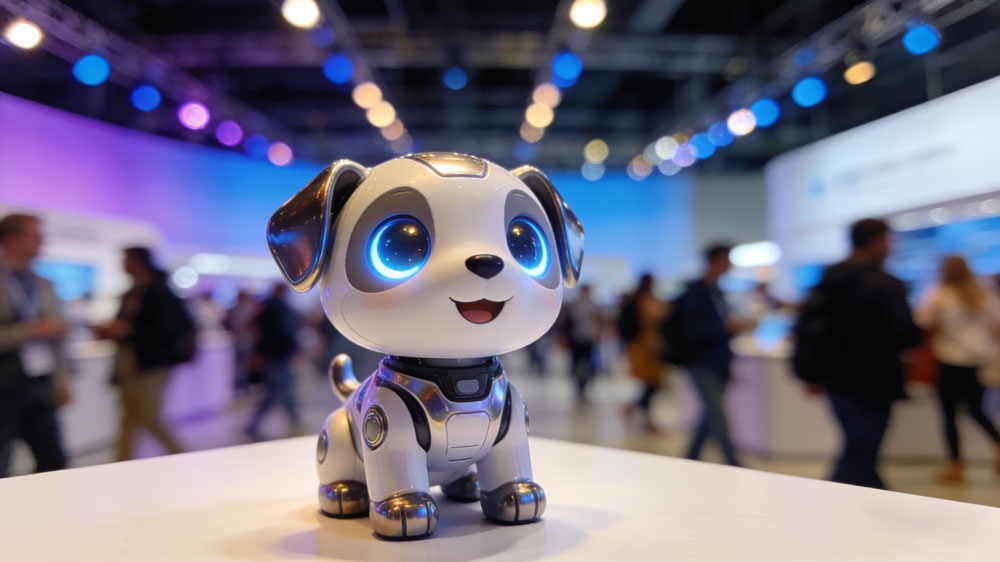
as noted by Northeast Securities, the core value proposition is shifting. Consumers are no longer just paying for a toy's “static” appearance but increasingly for its “dynamic” ability to interact, accompany, and educate. AI is becoming the key catalyst in this transformation, expanding the target audience from children to a broad, multi-generational demographic.
CES 2026 Spotlight: The “Emotion-First” Design Philosophy
This new paradigm was perfectly encapsulated by the Japanese AI pet “mirumi,” developed by Yukai Engineering, which became a viral sensation at CES. Defying expectations for complex, voice-activated gadgets, “mirumi” employs a “subtraction design” philosophy. It forgoes speech and cameras, instead using internal sensors and mechanics to detect proximity and touch, responding with subtle, lifelike movements like turning its head or shifting its gaze. Its purpose is singular: to create a pure, wordless sense of being noticed and accompanied. As one user described, it “maximizes the concentration of emotional feedback with the most minimalist hardware”. Alongside “mirumi,” a significant contingent of at least 18 Chinese companies showcased AI companion robots, highlighting the global momentum behind this trend.
The Chinese Market: A Hotbed for AI Companion Innovation
China has rapidly emerged as a central arena for developing and commercializing these empathetic AI toys. Tech giants are making strategic moves: JD.com launched its own AI plush toys that sold out repeatedly and hosts a platform connecting hundreds of brands. ByteDance leverages its Doubao large language model to power interactive toys like the “Show-Off Pack”. Huawei collaborated with Robo Poet to launch the sold-out “Smart Hanhan”. Furthermore, traditional toy manufacturers like Real Fun Culture are partnering with AI firms to infuse their products with interactive intelligence.
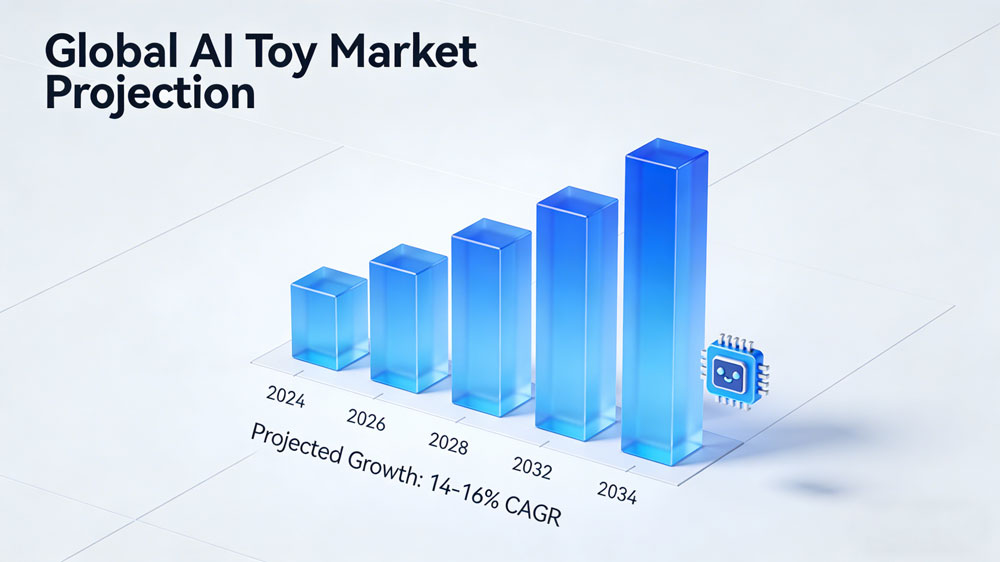
This activity is backed by staggering market forecasts. Statista projects the global AI toy market to grow at a 14%-16% CAGR, potentially exceeding $60 billion by 2034. In China, the market is expected to break the 100 billion RMB mark by 2030, growing at over 70% annually. Venture capital is flooding in, with companies like Ling Metaverse and Haivivi achieving valuations over 1 billion RMB after raising significant funds. Investor Zhu Xiaohu of GSR Ventures pointed to the surprisingly high token consumption by users of these toys as proof of genuine demand and user stickiness.
Navigating Challenges on the Path to Mainstream Adoption
Despite the enthusiasm, the industry faces growing pains. A key issue is high product return rates, which for some early AI plush toys reached 30-40%. This is often attributed to less-than-perfect user experiences, including laggy responses, repetitive interactions, and a perceived lack of true technological differentiation. As the market matures, overcoming these technical hurdles and moving beyond homogeneous product offerings will be critical for sustained growth.
The Future: Redefining Play and Connection
The rise of empathetic AI toys points to a future where playthings act as “super interfaces for family interaction”. Driven by the universal human need for connection and the declining cost of AI technologies, these companions are set to move from niche novelties to integral parts of daily life. For the global toy industry, the message from CES 2026 is clear: the future belongs not just to toys that think, but to those that feel.
Post time: Feb-05-2026


