
From Lingnan lion dance-inspired blind boxes to Labubu‘s global success, Chinese pop culture toys are winning hearts worldwide. Sales surged at Shenzhen Toy Fair 2026.
SHENZHEN – The narrative surrounding“Chinese toys” has undergone a fundamental shift. No longer viewed solely as OEM products manufactured in bulk for Western brands, toys originating from China are now increasingly valued as distinct cultural products in their own right—with growing numbers of international collectors eagerly seeking them out. This new reality was on full display at the 38th Shenzhen Toy & Pop Culture Fair (April 2026).
The rise of“Guochao” (Chinese national style) IPs
Nowhere was this shift more evident than in the fair’s booming pop culture (“chaowan”) section. According to official data cited across multiple media
outlets, the pop culture exhibition area has dramatically expanded from a single hall to three interconnected halls, marking a new peak in the category‘s presence and commercial importance.
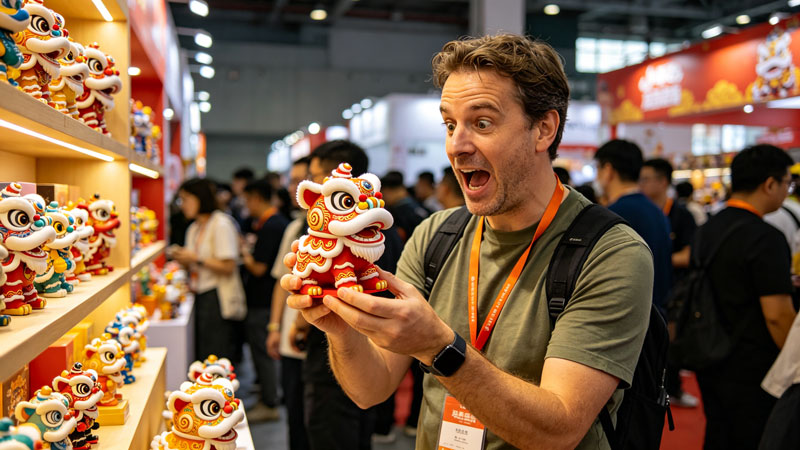
Meanwhile, “Guochao” —or Chinese national style—toys attracted intense international interest. One Shenzhen-based pop culture brand debuted a blind box series inspired by Lingnan‘s traditional lion dance culture. On the first day alone, three different buyers from the United States placed simultaneous orders for the product, describing it as “uniquely designed and full of authentic Chinese storytelling, which we believe will resonate strongly with local youth”.
Export data validates the trend
The shift is also evident in official trade data. The number of pre-registered overseas buyers at the Shenzhen fair jumped 137.5% year-on-year, with buyers from more than 52 countries attending. Much of this expanding demand is concentrated in North America, Europe, and Southeast Asia, where Chinese pop culture IPs are increasingly penetrating mainstream retail channels.
Plush toys: From children‘s playthings to all‑age “emotional commodities”
Within the broader pop culture category, plush toys posted the most dramatic growth. Year-on-year, the exhibition area allocated to plush toys surged 147% at the Shenzhen Toy Fair. Industry analysts attribute this sharp rise to a“profound transformation in consumer logic,” noting that plush toys have evolved from“exclusively for children”to“emotional consumption goods for all ages.”。
Market size and projections
According to estimates from the Guangdong Toy Association (GTIA), China’s pop culture toy market reached RMB 87.97 billion in 2025, achieving a 21% growth rate and overtaking traditional toys in total market value for the first time. The same industry estimates project the total market value of China‘s pop culture toys to reach RMB 110.1 billion in 2026, with annual growth exceeding 20%.
International success stories: Labubu and beyond
Labubu, one of the most successful Chinese IPs to date, has generated more than RMB 10 billion in revenue across its product portfolio, with international markets accounting for over 40% of total revenue. What makes Labubu distinctive is its ability to align with universal emotional needs—collectibility, cuteness, and personal expression—while retaining a distinctive Chinese aesthetic origin.
From Shenzhen to Shanghai and beyond, from Lingnan lion dance blind boxes to Labubu’s global collectors, “Chinese pop culture toys” have firmly arrived on the world stage—not as“low‑cost alternatives” but as desirable, culturally resonant products in their own right.
Post time: May-26-2026


