
Rising oil prices and raw material costs are reshaping toy supply chains. From“high-volume, low-mix” to“small-batch, high-mix” orders, Chinese toy exporters are learning to survive–and thrive–in the new normal.
Under the combined pressures of volatile international oil prices and evolving buyer behavior, China’s toy export industry is learning to adapt—not just by trimming costs but by fundamentally re-engineering its supply chain and production philosophy.
Raw material cost volatility becomes entrenched
At the 139th Canton Fair (spring 2026), price volatility was a recurring theme in conversations with toy exporters. According to interviews conducted at the fair, raw material prices for toys—particularly oil‑linked inputs such as ABS resin, polypropylene, and polyethylene—had risen by 10–20% compared to previous
periods. Industry representatives noted that the price setting mechanism had shifted from relatively stable quotations to“week‑to‑week” fluctuations driven by movements in Brent crude oil benchmarks. As a result, the traditional“stockpile inventory” approach to managing raw material costs had become unworkable for many small and medium-sized toy enterprises.
Structural shift in order patterns: From“high-volume” to“high‑mix”
Perhaps the most significant operational change described by toy exporters at the Canton Fair was the fundamental shift in order patterns. One prominent export-oriented plush toy company described the shift in stark terms:“In the past, three or four SKUs could generate orders of tens of thousands of units per SKU. Now we have more than ten SKUs, each requiring just a few thousand—or even just a few hundred—units”.
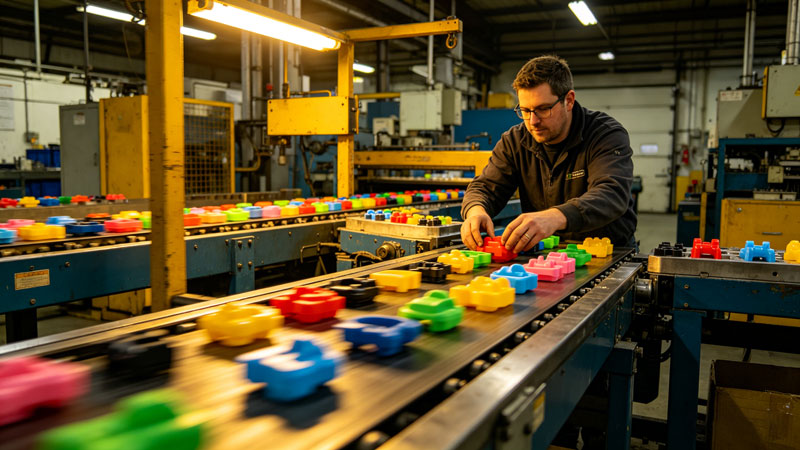
The shift from“low‑mix, high‑volume” to“high‑mix, low‑volume” ordering patterns has far-reaching consequences for the toy supply chain. It requires:
Shorter production runs with faster changeover times
More flexible labor allocation, as factories must switch between product types frequently
Modular component design to share common parts across many different SKUs
Test‑and‑learn inventory strategies to avoid costly unsold stockpiles
How exporters are responding
Exporters described several coping strategies at the Canton Fair:
Building direct long-term relationships with raw material suppliers to reduce spot-market price volatility
Investing in modular design platforms that allow rapid reconfiguration of manufacturing lines across different SKUs
Digital inventory management systems to track fast‑moving SKUs in real time
Selectively pass-through cost increases to buyers with transparent explanations, relying on long-standing relationships rather than pure price competition
Some exporters have also begun mapping out overseas production footprints to hedge raw material exposure. As one medium‑sized toy company noted, the first overseas factory it plans to build—likely in Indonesia—is not primarily a cost‑cutting measure but rather a strategic hedge against supply chain disruptions.
The“high‑mix, low‑volume” order pattern is not a temporary emergency—it is the normal operating environment for 2026. Exporters that master the art of flexible, fast-response production are the ones that will capture market share in the year ahead.
Post time: Jun-27-2026


