
Safety, STEM education, AI integration, and eco-friendly materials are the top decision-making factors for global buyers in 2026. Data from IIMedia and Global Market Insights show rising demand for smarter, safer, and greener toys.
As the 2026 toy sourcing season reaches its peak, four key criteria have emerged as the decisive factors in global buyer purchasing decisions: safety & quality assurance; STEM/educational value; AI/technology integration; and environmental sustainability.
Safety first, always
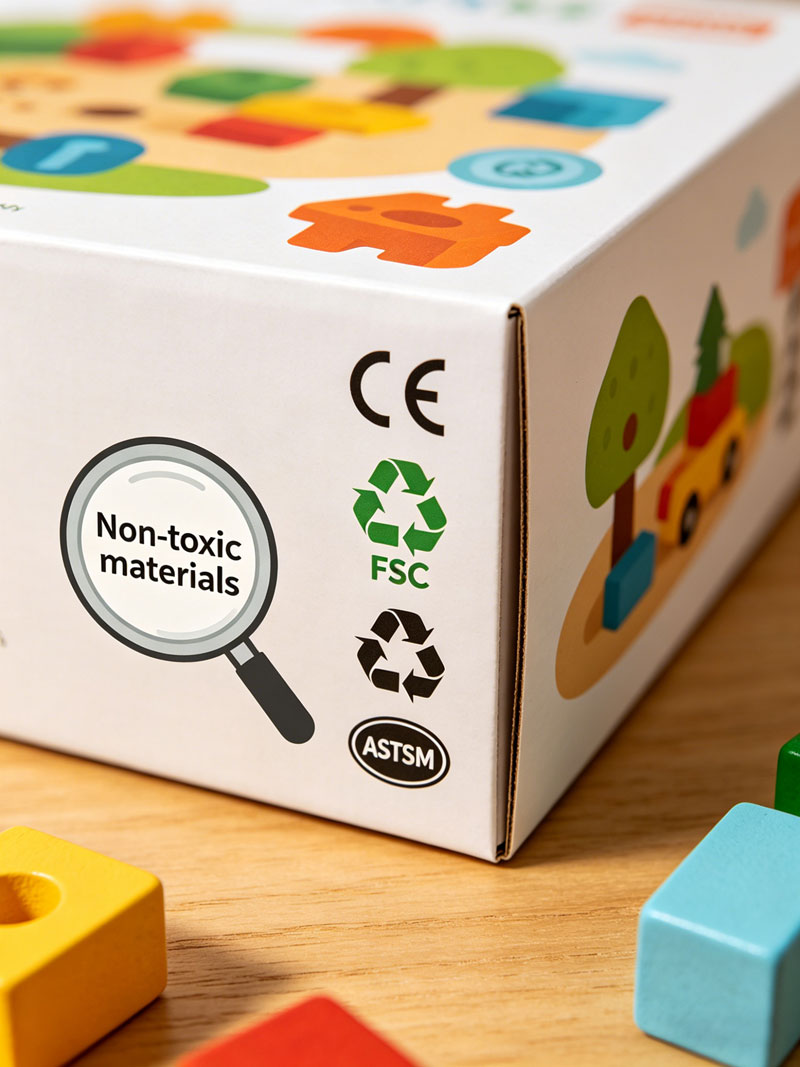
Across multiple international surveys and trade fair buyer interviews, safety consistently ranks as the most important purchase factor. A 2026 China consumer study by iiMedia Research found that „security, intelligence, and affordability“ constitute the three core expectations for AI toys, with safety and quality being the single largest driver of final purchase decisions. Specifically, 25.57% of surveyed consumers identified “high safety (non-toxic materials, no safety hazards, suitable for children)“ as the most essential characteristic of a quality toy.
The STEM education imperative
The second major demand is educational value—specifically, toys that support science, technology, engineering, and mathematics (STEM) learning. Mordor Intelligence forecasts the global educational toys market to grow at 8.51% CAGR between 2026 and 2031, driven by three key tailwinds: evidence-based play design; AI-enabled hybrid toys; and the rapid integration of coding and robotics into school curricula across many developed countries.
AI integration as a competitive differentiator
The third axis is AI and smart technology. A 2026 consumer survey found that 28.94% of consumers ranked “strong technological appeal (AI integration, contemporary technology-driven appearance and functionality)” as the most prominent characteristic of AI toys in their minds, while a report by Global Market Insights projected the global toy market will expand from
120.5 billion in 2025 to 212.0 billion by 2035—at a CAGR of 5.8%—with technology integration (AI/AR/VR) and sustainability as the two primary growth drivers.
Sustainability as a core purchase driver
The fourth pillar is environmental sustainability. An industry report indicates that 83% of Generation Z consumers now rank sustainability as a primary factor in their purchasing decisions—a figure that has risen sharply in just the past two years. At major toy fairs in 2026, eco-friendly materials, non‑toxic bio‑based plastics, and plastic‑free packaging that qualified for recognized environmental certifications generate immediate interest from international buyers.
For the global toy industry in 2026, the“must‑have” value proposition has four pillars: safety you can trust, education you can measure, technology that enhances rather than replaces play, and sustainability that reflects a shared commitment to the planet’s future.
Post time: Jul-06-2026


