
Toy exports from China surged 32.4% year-on-year in February 2026. Strong growth in Germany (17.6%) and Japan (23.7%) signals a robust start for the year. Read the latest export data analysis.
Early 2026 has delivered a dose of optimism to the global toy industry. According to the latest customs data compiled by the China Toy and Juvenile Products Association (CTJPA), China‘s toy exports—excluding games—totaled $5.06 billion in January–February 2026, marking a year-on-year increase of 1.5%. More notably, February 2026 alone saw a dramatic surge of 32.4% compared to the same month last year, providing a strong foundation for the year ahead. This positive trend has been widely described across industry reports as a “strong start” or even a “strong rebound“ for China‘s toy export sector in 2026.
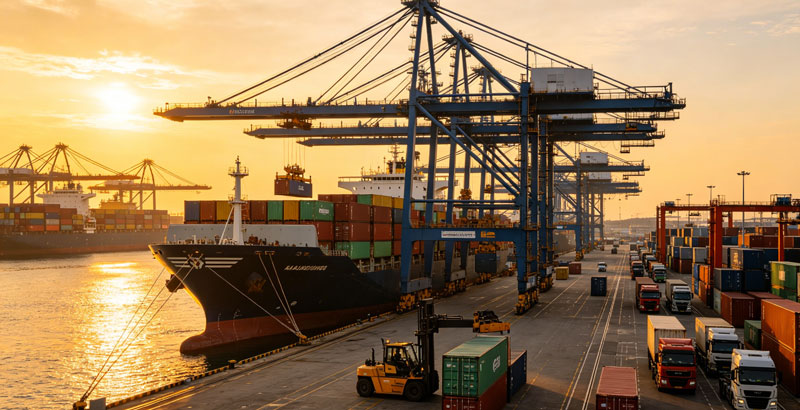
Regional Performance: Germany and Japan Lead the Growth
United States: Remains the largest single export destination, with exports totaling $1.29 billion in the first two months of 2026, accounting for 25.4% of China’s total toy exports. However, exports to the U.S. recorded a slight decline of 2.5% year-on-year.
European Union (EU): Exports surged to 930 million, an 8.4210 million, a remarkable 17.6% year-on-year growth.
Japan: Exports to Japan reached $300 million in January–February 2026, jumping 23.7% from the same period last year. Among all major export markets, Japan recorded the fastest growth rate.
Other Markets: Exports to Latin America grew modestly by 1.4% to 390 million. Meanwhile,exports to Southeast Asia declined 15.2580 million, likely reflecting inventory adjustments and changing demand patterns in the region.
Best performing product categories: Riding toys and dolls lead
At the individual product category level (customs codes under HS code 9503), “riding toys“—including tricycles, scooters, and pedal cars—recorded the largest gain, with exports of $370 million in January–February 2026, a robust 24.2% increase year-on-year. Toys representing animals (customs code 95030021) and dolls (customs code 95030029) both posted a 12.5% and 12.6% year-on-year increase, respectively.
Regional export powerhouses: Guangdong leads, Beijing surges
Guangdong Province—China‘s undisputed toy production and export hub—recorded toy exports of $2.03 billion in the first two months of 2026, a 24.1% year-on-year increase that accounted for 40.1% of China’s total toy exports, up 7.3 percentage points from the same period last year. Beijing also recorded an exceptional 57.2% year-on-year gain, largely driven by trade in higher-value design-led and technology-enabled products.
A cautious note on challenges and costs
Despite the strong export rebound, industry participants remain vigilant. As widely reported at the 139th Canton Fair in spring 2026, rising raw material costs—particularly oil-linked plastics such as ABS, polypropylene, and polyethylene—continued to squeeze margins. One prominent small to medium-sized plush toy exporter noted that “order structures have shifted dramatically from few items in huge quantities (e.g., 3–4 SKUs at 10,000+ units each) to many items in small quantities (e.g., 10+ SKUs at just a few hundred units per SKU)”. Surviving and thriving in today‘s global toy market increasingly means having the flexible supply chain and agile manufacturing capabilities required to efficiently manage“small batch, high variety” orders. Supply chain volatility remains the new normal.
Outlook 2026: A year of cautious optimism
The 2026 export rebound provides early evidence that global demand for Chinese toys remains structurally strong. While challenges—including trade policy uncertainty, raw material price fluctuations, and shifting order structures (small batch/high mix)—persist, the February 2026 data suggests the industry is entering 2026 on solid ground.
Post time: May-11-2026


