
Jiangxi, March 11, 2026 – As the Middle East crisis escalates, China finds its substantial economic and strategic interests in the region increasingly vulnerable. From energy security to technology company operations, the conflict presents multiple challenges that Beijing is now forced to navigate.
Energy Security in the Crosshairs
The Strait of Hormuz, now closed to shipping, carries approximately one-fifth of the world's oil consumption—some 18-19 million barrels daily of crude oil and condensate. For China, the world's largest oil importer, this represents a critical vulnerability.
"If this conflict becomes a protracted war, oil prices will remain high for an extended period, potentially triggering stagflation expectations that could shock global financial markets and economies beyond expectations," warned Zhang Bin, a national political advisor and deputy director of the Institute of World Economics and Politics at the Chinese Academy of Social Sciences.
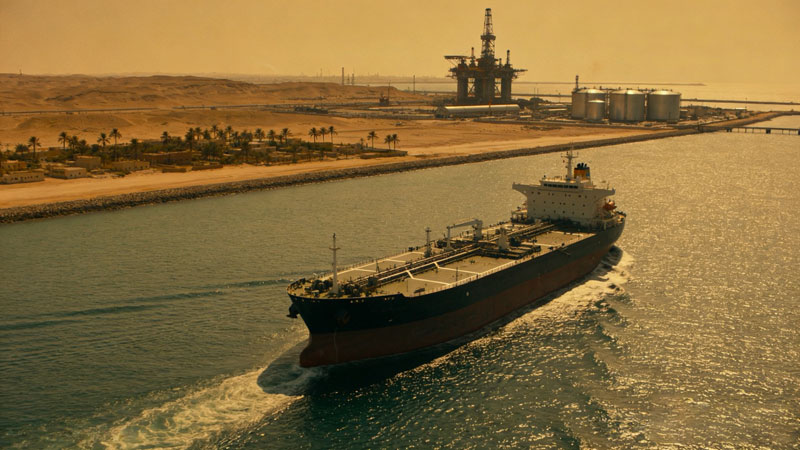
Morgan Stanley analysis suggests that Gulf producers have only about 25 days of onshore storage capacity for stranded production. If the Strait remains closed beyond that, production cuts become inevitable. For China, heavily dependent on Middle Eastern oil, this scenario poses significant supply risks.
Technology Sector Operations Suspended
The conflict has forced multiple Chinese technology companies to suspend operations across the region. Autonomous driving firms, which had flocked to the Gulf states as ideal testing grounds, have been particularly hard hit.
WeRide, a Guangzhou-based autonomous driving startup, suspended its Robotaxi operations in Dubai immediately following the conflict's escalation. The company's nearly 100 employees in the region have transitioned to work-from-home arrangements, with vehicles moved indoors for safe storage.
Baidu's Apollo autonomous driving commercial service, launched in Abu Dhabi just two months ago in January 2026, experienced temporary service interruptions. While partially restored, its testing programs in Dubai remain suspended.
Even companies with significant regional presence are exercising extreme caution. Midea, which counts the Middle East as a key overseas market with offices in Riyadh, Dubai, and Doha, has moved all local staff to remote work.
Investment Negotiations Delayed
The crisis has cast a shadow over cross-border investment flows. Multiple Chinese investors have suspended negotiations for infrastructure and energy asset acquisitions in the Middle East, according to Reuters. A Hong Kong-based investment banker noted that banks now require completed security assessments before permitting staff to travel to the region, creating "significant delays" in mutual visits between Middle Eastern investors and Chinese companies seeking funding.
Fred Hu, chairman of Primavera Capital Group, offered a measured perspective: while the conflict will disrupt short-term capital flows and investment talks, such interference is "unlikely to cut off, much less reverse" the deepening investment relationship between the two regions.
Human Cost
The human dimension cannot be overlooked. As of March 2, over 3,000 Chinese citizens had been evacuated from Iran. One Chinese citizen tragically lost their life in the military conflict. China's Ministry of Foreign Affairs has issued repeated warnings urging citizens to leave affected areas.
Strategic Restraint
Despite these pressures, analysts expect China to maintain strategic restraint. Hu Chunchun, director of the European Studies Institute at Shanghai International Studies University, noted in an interview with German media that while Iran holds strategic significance in China's regional economic calculus, Beijing is highly unlikely to intervene militarily in a direct confrontation.
"China rarely participates in overseas conflicts through military means and does not tend to use military force to influence regional situations," Hu explained. The "comprehensive strategic partnership" with Iran represents a cooperation platform rather than a military alliance with collective defense obligations.
Long-Term Outlook
The crisis may prompt Chinese companies to reassess their regional strategies. "Companies should diversify their international market presence and avoid concentrating business focus in specific countries or regions," advised Cai Shixuan, founder of Middle East strategic consulting firm Invest MENA. "Going all-in on any single market represents a high-risk strategic move".
Yet optimism about the region's long-term potential remains. Midea noted that Gulf countries, particularly oil-rich nations, maintain strong demand growth fundamentals, with the company already established as a leading home appliance brand in the region.
As one observer noted, the conflict may be "reshaping the heading of Chinese companies going global, transforming geopolitical risk from background noise into an uncontrollable storm directly affecting business strategy. The most direct answer to such unpredictability may still be diversification".
Post time: Mar-11-2026


